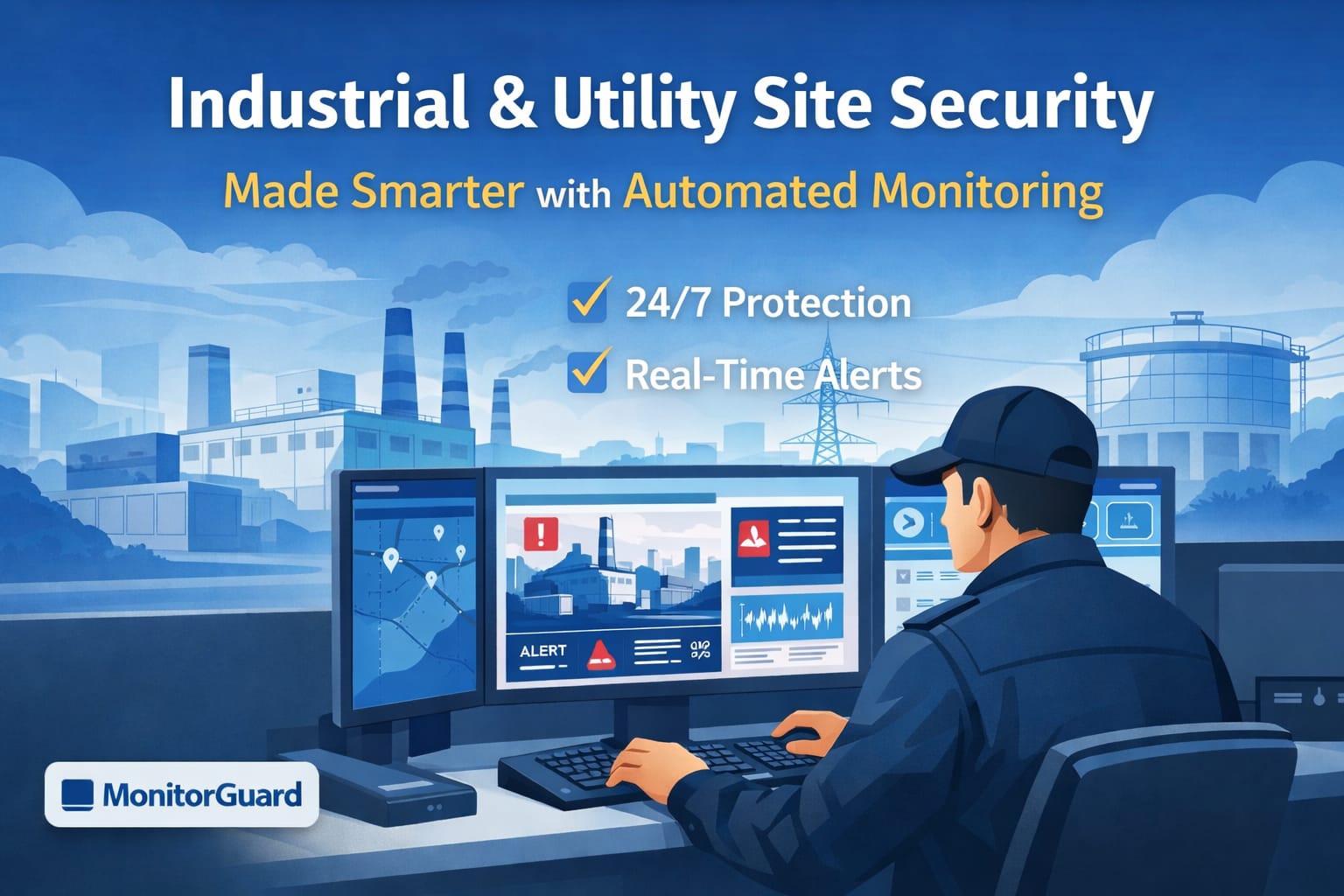
Industrial & Utility Site Security with Automated Monitoring
Power stations, water treatment works, gas distribution sites and manufacturing plants are the quiet backbone of everyday life. When one of them stops, the effects spread quickly: lost production, safety hazards, unhappy customers and, in some cases, interrupted public services.
Most of these sites still lean on on-site guards, manual patrols and basic alarms. That works up to a point, but today's sites are bigger, more remote and under more regulatory pressure than ever. Industrial site security now needs better information, not just more people walking the perimeter.
Why industrial and utility sites need smarter security
These sites have problems that a standard commercial building doesn't:
- Remote or sprawling locations that are hard to cover on foot
- Expensive machinery, copper, fuel and equipment that attract theft
- Strict safety and legal compliance requirements
- 24/7 operations where every hour of downtime costs money
A missed check at a substation at 3am isn't a small slip. It can be the start of an outage.
Where traditional security methods struggle
Problems show up late. Patrols and alarm-only systems often flag an issue after the damage is done, which is the most expensive time to find out.
People get tired. Night shifts, remote posts and poor handovers leave gaps that nobody notices until something goes wrong.
Coverage doesn't scale. Large sites need several guards just to maintain a consistent presence, and costs climb quickly.
Managers are working blind. Without live updates, it's hard to know whether a round was completed, who is on site, or whether an officer needs help.
Data goes to waste. Paper logs and disconnected systems make it almost impossible to spot patterns or plan ahead.
How automated monitoring changes the picture
Automated monitoring doesn't take guards off site. It makes what they do visible, verifiable and faster to act on. With a platform like MonitorGuard, site teams can:
- Prove patrols happened using a guard tour system with QR and NFC checkpoints at gates, pumps, panels and perimeters
- Keep isolated staff safe through lone worker safety check-ins on remote or night-time posts
- Log faults, damage and suspicious activity instantly with incident reporting from a phone
- Stay audit-ready with compliance tracking for training, licences and certificates
- Assign and track equipment with asset management
- Run every site from one dashboard, using the mobile and web app instead of phone calls and spreadsheets
The shift is from reacting after an incident to catching early warning signs, such as a missed checkpoint or an unanswered check-in, while there's still time to act.
Benefits for industrial and utility operations
Safer people and equipment. Faster reporting and check-ins mean problems reach the right person sooner.
Less downtime. Quick response keeps a small issue from turning into an operational shutdown.
Easier multi-site control. Managers can oversee several plants, depots or substations in one place.
Evidence for audits. Timestamped digital records make regulatory checks and client reviews far smoother.
Better use of budget. Stronger coverage with your existing team often delivers more than adding headcount. A client portal can also give site owners direct proof of service.
What to look for in a monitoring platform
- Does it work offline or in low-signal areas common at remote sites?
- Can it cover patrols, incidents and lone worker checks in one system?
- Are logs and reports easy to export for audits?
- Can it handle multiple sites, teams and shift patterns?
If you're still comparing options, read our guide to 12 questions to ask before buying workforce management software. Working in ports or transport instead? See how automated monitoring strengthens maritime, port and transport security. You can also explore how security companies use MonitorGuard and how it helps reduce risk.
Frequently asked questions
Why is security so important at utility sites? Because an incident can interrupt essential services, create safety risks and lead to heavy financial and regulatory consequences.
Does automated monitoring replace on-site guards? No. Guards still patrol and respond. The software verifies their rounds, flags missed checks and removes manual paperwork.
Can it work at remote sites? Yes. Mobile tools and checkpoint scanning let teams record patrols and incidents on large or isolated sites, with everything visible from one dashboard.
How does it support compliance? Patrols, incidents and training records are logged digitally with dates and times, which makes audits quicker and records easier to defend.
Final thoughts
Industrial and utility sites can't rely on traditional methods alone. Automated monitoring gives security teams the visibility, proof and speed that large, critical sites demand, without driving costs through the roof.
Ready to see how it works on your sites? Try MonitorGuard free for 30 days or book a demo.