Absence Management System: What to Look For (UK Guide)
Absence Management System: What to Look For (UK Guide)
An absence management system is software that records, monitors and reports employee absence, including sickness, holiday and unauthorised leave. A good one for UK employers should offer real-time absence logging, automatic alerts, Bradford Factor and trend reporting, shift and rota integration, mobile access, and UK GDPR-compliant handling of health data.
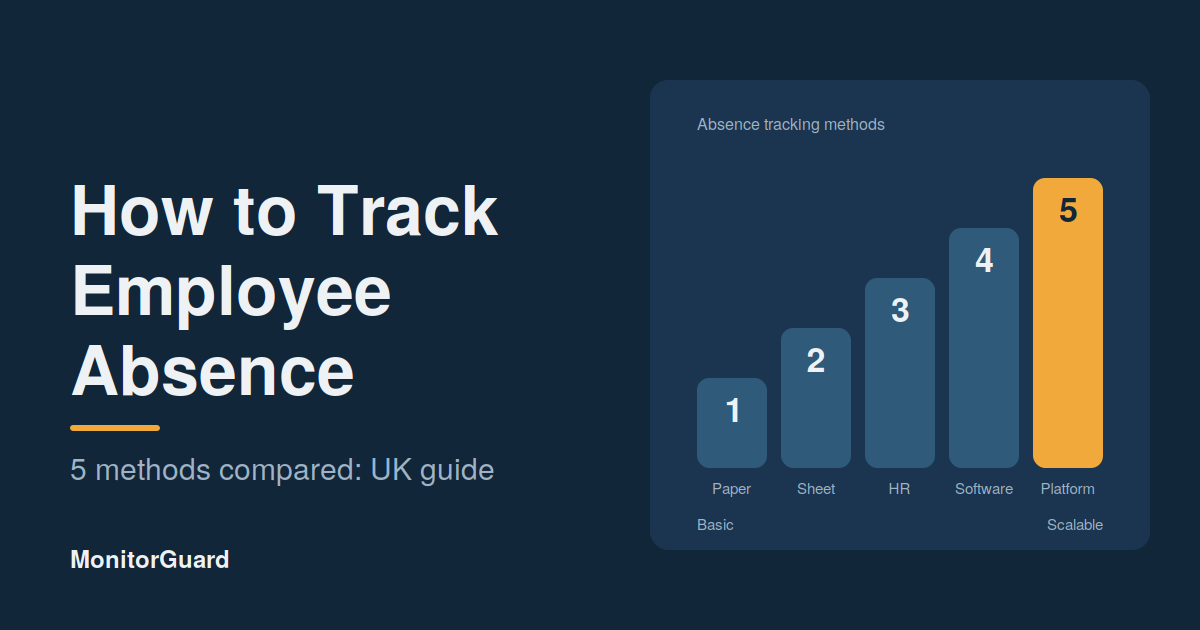
If your team still tracks absence on spreadsheets or paper, this guide shows what to look for, what to avoid and how to choose.
What is an absence management system?
An absence management system (also called absence tracking software) is a tool that lets employers record and analyse staff absence in one place. Employees or managers log an absence, the system calculates entitlement and pay implications, and reports show patterns such as repeat short-term sickness or high absence on certain shifts.
It differs from a basic holiday planner because it focuses on unplanned absence: sickness, lateness, no-shows and return-to-work follow-up.
Why spreadsheets and paper stop working
Spreadsheets work for a team of five. They break down when you have multiple sites, shift patterns or managers entering data. Common problems include:
- Errors and missed entries: one wrong formula can hide a pattern.
- Delays: managers find out about absence late, so cover is arranged late.
- No alerts: nobody is told when someone reaches a trigger point.
- Compliance risk: sickness records are sensitive data and are hard to secure in shared files.
- No visibility: you cannot see trends by site, team or day of week.
According to CIPD research, the average UK employee loses several days a year to sickness absence [add the latest CIPD figure and link here before publishing]. For shift-based industries such as security and cleaning, each absence also means finding last-minute cover.
Key features to look for
|
Feature |
Why it matters |
|---|---|
|
Real-time absence logging |
Managers know about gaps immediately, not at the end of the week. |
|
Automatic alerts and triggers |
Notifies the right person when a pattern or threshold is reached. |
|
Bradford Factor reporting |
Scores repeated short absences so you can act consistently and fairly. |
|
Sickness and SSP tracking |
Helps you apply Statutory Sick Pay rules correctly. |
|
Shift and rota integration |
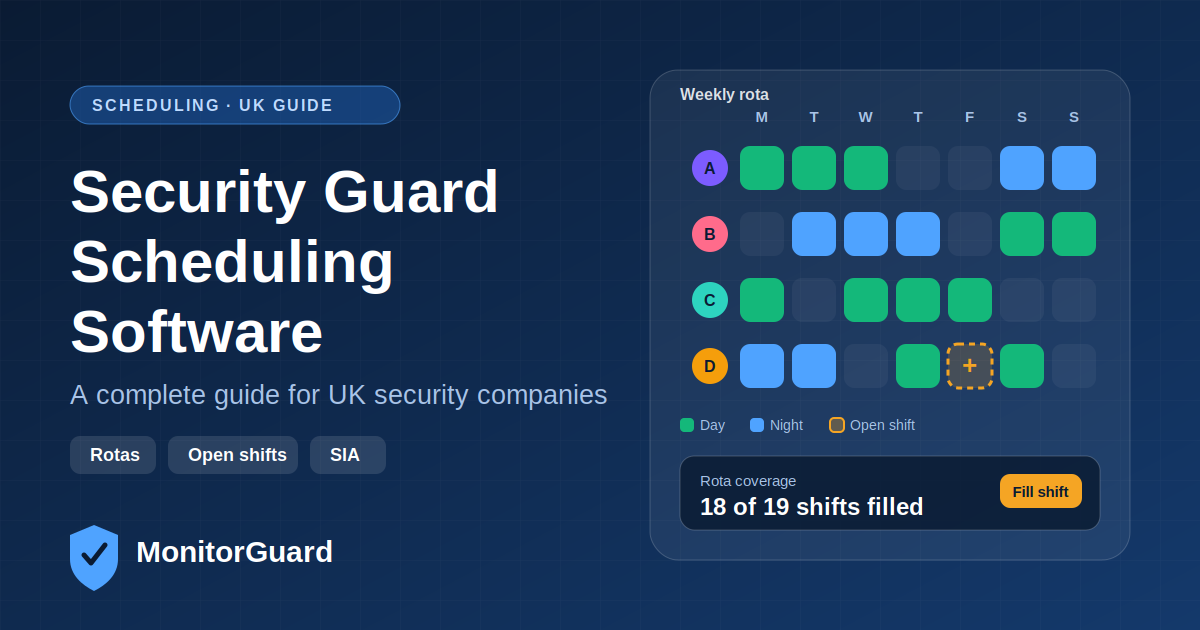
Links absence to scheduling so cover can be arranged quickly. |
|
Return-to-work forms |
Records interviews and fit notes in one place. |
|
Reports and dashboards |
Shows trends by employee, team, site and period. |
|
Mobile access |
Lets field staff report absence and managers approve it on the go. |
|
Secure data storage |
Protects health information and controls who can view it. |
What UK employers need to get right
An absence system should support your legal duties, not create new risks.
- Statutory Sick Pay (SSP): rules and eligibility are changing following recent employment law reforms, so check the current rules on GOV.UK and make sure your software is updated when the rules change.
- UK GDPR: information about an employee's health is special category data. Your system should restrict access, log who views records and let you delete data according to your retention policy.
- Fit notes and self-certification: employees can self-certify for the first seven days of sickness, and a fit note is normally needed after that. Your system should record both.
- Consistency and fairness: the Bradford Factor can be useful, but it should never be applied mechanically. Disability-related absence and pregnancy-related absence need special care under the Equality Act 2010.
What is the Bradford Factor?
The Bradford Factor is a formula that scores absence by giving extra weight to frequent short absences: B = S² × D, where S is the number of separate absences and D is the total days absent over 52 weeks.
For example, one absence of 10 days scores 100 (1 × 1 × 10). Five separate absences of two days each also total 10 days, but score 250 (5 × 5 × 10). That difference is why the Bradford Factor highlights repeated short-term absence.
Absence management for security and cleaning teams
Shift-based teams face specific challenges. A missed shift on a guarded site or a cleaning contract has an immediate effect on the client, so speed matters more than in an office.
For these teams, look for software that:
- shows which sites are uncovered the moment someone reports absent,
- links absence data to scheduling and attendance records,
- supports multi-site reporting for operations managers,
- works on mobile for staff who have no desk.
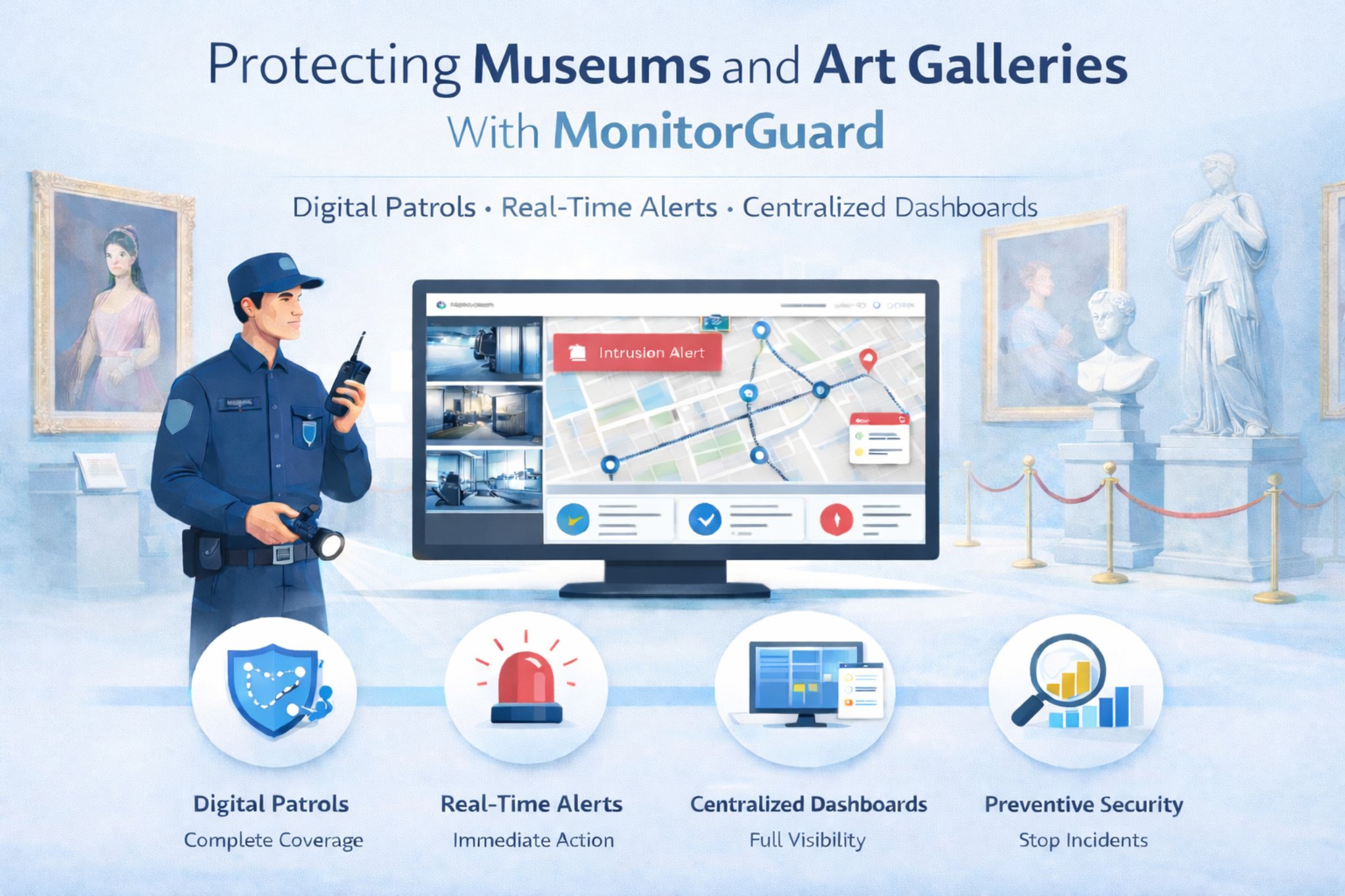
Platforms such as MonitorGuard are built around this kind of workforce, combining absence tracking with staff management and site monitoring in one system.
How to choose the right system: a 6-point checklist
- List your must-haves. Sickness tracking, rota links, mobile app, reporting.
- Check UK compliance. Ask where data is stored and how health data is protected.
- Test usability. If managers find it slow, they will go back to spreadsheets.
- Ask about integrations. Payroll, HR and scheduling tools should connect.
- Compare pricing clearly. Look for per-employee costs, setup fees and minimum contracts.
- Request a demo using your own scenarios. Try a real shift pattern or a repeat-absence case.
Common mistakes to avoid
- Buying on price alone and ignoring reporting.
- Using the Bradford Factor without human judgement.
- Not training managers on return-to-work conversations.
- Giving too many people access to health information.
- Never reviewing the data: tracking is only useful if someone acts on it.
Frequently asked questions
What is an absence management system?
It is software that records and analyses employee absence, including sickness, holiday and unauthorised leave, so employers can manage cover, spot patterns and meet legal requirements.
How much does an absence management system cost in the UK?
Most providers charge per employee per month, and prices vary with features and company size. Always ask about setup fees, contract length and extra modules before comparing quotes.
Is absence management software UK GDPR compliant?
It can be, but you should confirm it. Check that health data is encrypted, access is role-based, and you can delete records in line with your retention policy.
Can it track sickness trends?
Yes. Good systems show trends by employee, team, site and day of the week, and flag repeat short-term absence so you can act early.
Is the Bradford Factor legal to use?
Yes, it is a tool, not a legal rule. Use it as a prompt for a conversation, never as an automatic trigger for discipline, and take extra care with disability-related or pregnancy-related absence.
Final thoughts
The right absence management system gives you faster cover, fewer repeat problems and cleaner records. Start by listing your must-have features, check UK data protection, and test any system with real scenarios before you commit.
Want to see how absence tracking works for shift-based teams? [Book a MonitorGuard demo]