What Is a Guard Tour System? UK Guide for Security Firms
What Is a Guard Tour System? A Practical Guide for UK Security Companies
If you run a security company, you already know the hardest part of patrol work: proving it happened. A client asks whether the 2am patrol was completed, and the answer is a paper log, a phone call or a guard's word. A guard tour system replaces that uncertainty with timestamped, verifiable records.
This guide explains what a guard tour system is, how it works, how QR, NFC and GPS checkpoints compare, and what to look for when choosing one.
What Is a Guard Tour System?
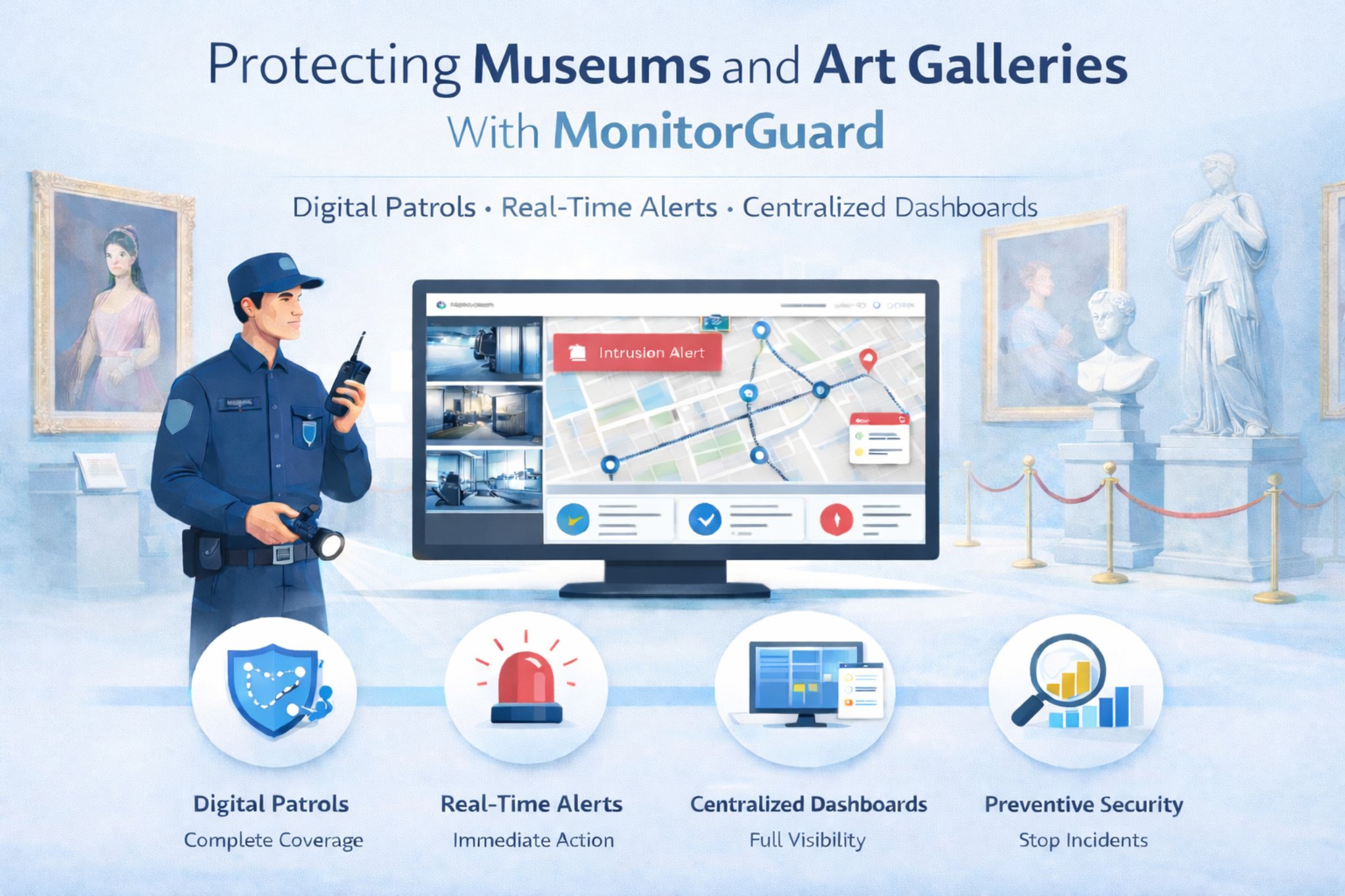
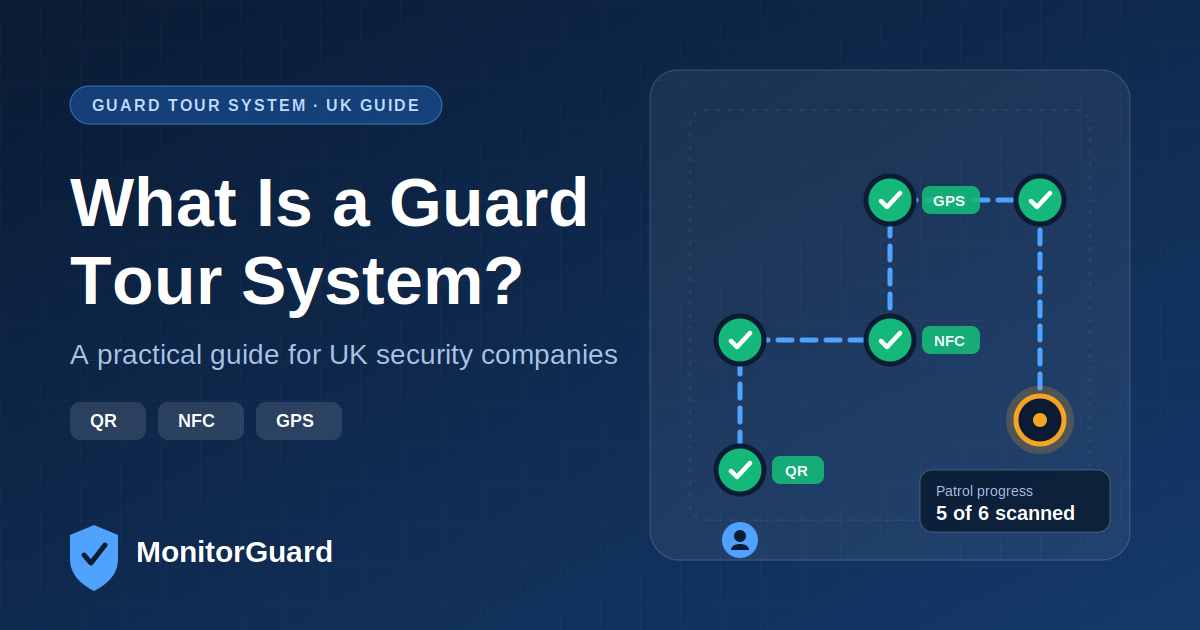
A guard tour system (also called a guard patrol system) is software, often paired with checkpoints placed around a site, that records whether security officers completed their patrols. Each time a guard scans a checkpoint, the system logs who was there, where they were and at what time.
Those records feed into reports that managers and clients can review. Modern platforms also connect patrols with incident reporting, scheduling and attendance, so patrol data is part of the wider picture of how a site is being covered.
How a Guard Tour System Works
- Set up the site. Checkpoints are placed at key locations such as entrances, plant rooms, car parks and stairwells.
- Define the tour. Managers create a patrol route with required checkpoints, expected order and time windows.
- Guards patrol and scan. Using a mobile app, guards scan each checkpoint as they reach it.
- Live monitoring. Supervisors can see completed, late or missed checkpoints.
- Reporting. Completed tours generate a record that can be shared with clients or kept for audits.
QR Codes vs NFC Tags vs GPS: Which Checkpoint Type?
| Method | How it works | Strengths | Limits |
|---|---|---|---|
| QR code | Guard scans a printed code with a phone camera | Very low cost, quick to set up | Codes can be damaged or photographed |
| NFC tag | Guard taps the phone on a tag | Fast, durable, harder to copy | Slightly higher cost per checkpoint |
| GPS | Location is captured automatically | No hardware on site, good for large or mobile patrols | Weaker accuracy indoors |
Many UK security companies use a mix: QR or NFC for indoor checkpoints and GPS for outdoor or vehicle patrols. The right choice depends on the site, budget and how strong a level of verification the client expects.
Why Guard Tour Systems Matter
Proof of service. Timestamped scans give clients evidence that patrols were completed, which supports contract renewals and helps resolve disputes.
Fewer missed patrols. Real-time visibility lets supervisors act when a checkpoint is late rather than discovering it the next day.
Less admin. Paper logs have to be collected, read and typed up. Digital records generate reports automatically.
Better accountability. Guards know their patrols are recorded accurately, and good guards get credit for the work they do.
Joined-up operations. When patrols sit alongside incident reports and rotas, managers can see how a site is performing in one place.
Key Features to Look For
- Flexible patrol routes with time windows and required checkpoints
- QR, NFC and GPS support
- Real-time alerts for missed or late checkpoints
- Incident reporting from the same app, with photos and notes
- Client-ready reports that can be exported or shared
- Works across multiple sites
- Links to scheduling and attendance
- Simple mobile app guards can learn quickly
Guard Tour System vs Paper Patrol Logs
| Paper logs | Guard tour system | |
|---|---|---|
| Verification | Easy to backfill | Timestamped scans |
| Reporting | Manual, slow | Automatic |
| Visibility | After the shift | Live |
| Client trust | Depends on the guard's word | Based on records |
| Admin time | High | Low |
Paper logs still work for very small operations, but they get harder to manage and defend as you add sites and clients.
How to Choose a Guard Tour System in the UK
- Start with your sites. Indoor, outdoor and vehicle patrols may need different checkpoint types.
- Check it fits your operation. Patrols, incidents, rotas and attendance work best when they share one platform.
- Think about your clients. Look at what the reports look like, since this is what your client will actually see.
- Consider your standards. Many UK firms work to industry standards such as BS 7499 for static site guarding and mobile patrol services, so confirm the system's records support your own audit needs.
- Test it with real guards. A system that is hard to use will not be used.
- Run a trial on one site before rolling out.
Frequently Asked Questions
What is a guard tour system?
Software, often with checkpoints, that records and verifies security patrols with timestamps and locations.
Are QR codes or NFC tags better?
QR codes are cheaper and quick to start with; NFC tags are more durable and harder to fake. Many companies use both.
Can guards cheat a guard tour system?
No system is perfectly tamper-proof, but timestamped scans, GPS data and supervisor review make false records much harder than with paper logs.
Do I need special hardware?
Not necessarily. Many modern systems run on a standard smartphone, with printed QR codes or low-cost NFC tags as checkpoints.
Is a guard tour system suitable for small security companies?
Yes. Even a company with a handful of sites benefits from proof of service and less paperwork.
See MonitorGuard's Guard Tour System in Action
MonitorGuard combines patrol verification, incident reporting, scheduling and attendance in one platform built for UK security companies. Explore the guard tour system or try MonitorGuard free for 60 days.